
Part Two: Learning to Notice the Small Things
There is something beautiful about a glimmer.
Not because it changes everything.
But because it reminds us that everything is not lost.
When we live with an emotionally challenged dog, our brains become incredibly good at spotting danger. We notice every bark before it happens. Every tightening of the lead. Every approaching dog. Every unexpected noise. Every glance from another person.
Our nervous systems become detectives, constantly searching for the next problem to solve.
And while that vigilance often comes from love, it can quietly steal something precious from us.
It can make us forget to notice the moments that are already safe.
Our brains are designed this way
Human brains evolved to remember danger more readily than safety.
Psychologists often refer to this as the negativity bias. From an evolutionary perspective, remembering what was dangerous helped our ancestors survive.
The difficulty is that our brains don’t always realise the emergency has passed.
If you’ve spent months—or years—supporting a dog who struggles with the world, your brain may still be expecting the next difficult moment, even during a peaceful walk or a quiet evening together.
Your dog’s nervous system may be doing exactly the same thing.
Both of you may be waiting for something difficult to happen.
That doesn’t mean you are the cause of your dog’s emotional challenges.
Many guardians worry that every quick intake of breath, every moment of tension on the lead, every racing heartbeat or wave of dizziness is somehow “telling” their dog to react. While our dogs can certainly notice changes in our body language and emotions, it is important not to place the weight of responsibility on yourself.
Let’s not forget something we rarely think about in our own lives.
Imagine someone suddenly jumps out from behind a wall and shouts, “Boo!”
You react before you’ve had time to think. You might scream, jump backwards, laugh once the surprise has passed, or even blurt out a few choice words. None of those responses were conscious decisions. They were automatic protective reactions generated by your nervous system.
We experience these moments every day without labelling ourselves as “reactive.” Someone cuts in front of us in traffic, we flinch when a loud noise startles us, or we instinctively step back when something unexpectedly enters our personal space. These are all normal nervous system responses to something our brain has interpreted as important or potentially threatening.
Our dogs are no different.
When they bark, lunge, freeze, spin, or try to create distance, those behaviours are often their nervous system responding long before the thinking parts of the brain have had an opportunity to fully assess the situation. Their behaviour is communication, not a calculated decision to misbehave.
Perhaps this is also where we can begin to rethink the language we use.
We often describe dogs as reactive, but a reaction is an event, not an identity.
Just as we wouldn’t define ourselves by every startled jump, every frustrated sigh in traffic, or every instinctive step backwards, our dogs deserve the same grace. They are not being reactive; they are experiencing a reaction.
That distinction may seem small, but language shapes the way we think. When we stop defining dogs by their most difficult moments, we create space to see the whole individual—the curious dog who loves sniffing every blade of grass, the companion who rests peacefully beside us, the learner whose brain is constantly adapting, and the resilient individual who is doing the very best they can with the information their nervous system has available in that moment.
Understanding this doesn’t remove our role in supporting them. Instead, it helps us replace guilt with compassion—for them, and for ourselves.
Because healing isn’t about never reacting.
It’s about helping a nervous system discover that recovery is possible, that safety can return, and that tomorrow doesn’t have to feel exactly like yesterday.
Glimmers don’t ask us to ignore reality
Sometimes people misunderstand what glimmers are.
They aren’t toxic positivity. They aren’t pretending everything is fine. They aren’t saying, “Just think positively.”
Instead, glimmers gently ask:
“Can you also notice what feels safe right now?”
Both things can exist together. Your dog may still bark at visitors.
And… They may have slept peacefully beside you for twenty minutes this morning.
You may still feel exhausted.
And… You may have smiled when they nudged your hand for affection.
Neither experience cancels out the other.
Our brains evolved to help us survive. They are incredibly good at noticing danger and remembering experiences that may keep us safe in the future. But they were never designed to remain in a constant state of vigilance, searching endlessly for the next problem to solve. Living in that state is exhausting. It asks our nervous system to carry more than it was ever intended to, and over time it can make a single difficult moment feel as though it defines the entire day.
The same can happen when we’re supporting an emotionally challenged dog.
It’s so easy to replay the one bark, the one lunge, or the one moment that didn’t go as we’d hoped, while overlooking the hundreds of moments where nothing happened at all. The quiet sniff. The relaxed body. The soft check-in. The peaceful nap afterwards.
We need to offer ourselves—and our dogs—the same compassion we would offer someone we love.
Your dog reacted to something that their nervous system found difficult.
So what?
That sentence probably isn’t said often enough.
Because reacting doesn’t make your dog “bad.” It doesn’t make them unworthy of love, beyond help, or somehow broken. It simply tells us that, in that moment, something felt overwhelming to them.
One of the things I hear most often from guardians is:
“I wish people could see them at home. They’re so loving when it’s just us.”
And my heart breaks every time.
Because your dog is not defined by their hardest moments.
They are defined by the whole of who they are—the dog who leans into your hand for a stroke, who wiggles when you pick up their favourite toy, who sighs as they curl up beside you at the end of the day, who continues trying despite finding parts of the world incredibly difficult.
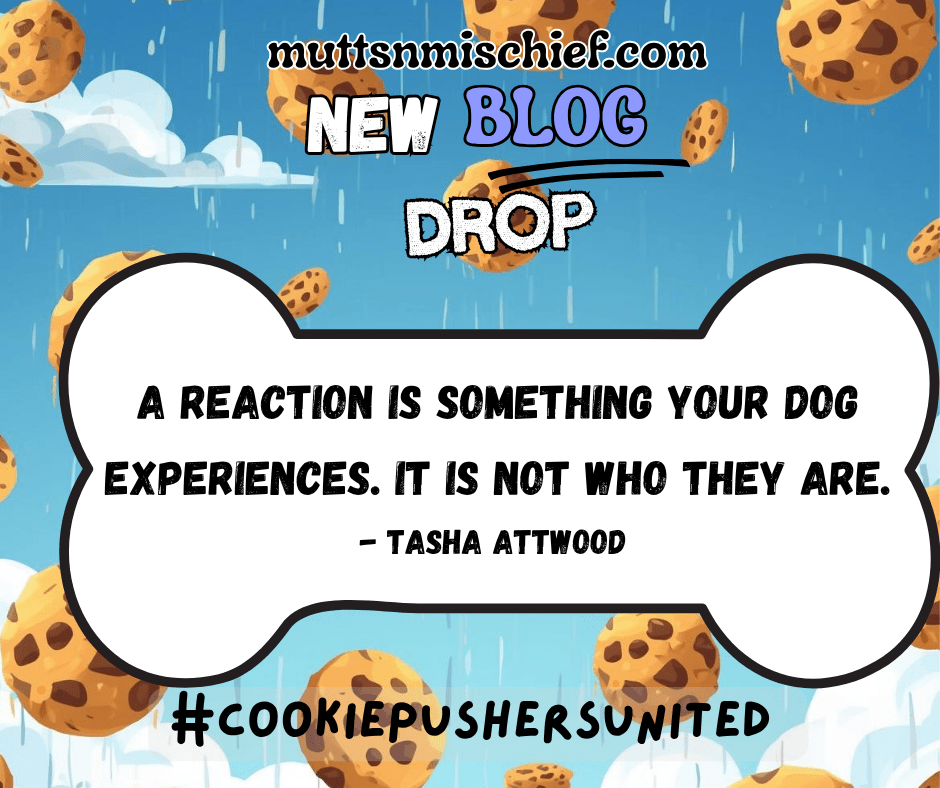
A reaction is something your dog experiences.
It is not who they are.
Dogs notice glimmers too
One of my favourite things about dogs is that they often find joy in places we overlook.
The familiar scent on a lamp post.
A breeze carrying thousands of stories.
The warmth of sunshine across the grass.
Rolling in clover.
Watching birds.
Sniffing slowly without needing to be anywhere.
Sometimes I wonder whether our dogs are quietly trying to teach us something.
Perhaps the world isn’t only made of threats.
Perhaps it’s also made of moments.
Sometimes those moments aren’t found on a walk at all.
Many guardians feel guilty when they’re recovering from an illness or injury, when the weather is simply too hot to venture out safely, or when they’ve been advised to give their dog a break from walks for a few days following a stressful or overwhelming experience. It can feel as though they’re somehow letting their dog down.
But what if we looked at those moments differently?
Rather than feeling guilt, perhaps we could celebrate them.
Home isn’t “doing nothing.” For many dogs, home is their safe space—a place where the nervous system can settle, where the body can recover, and where learning that the world is safe can continue without the pressures of the outside environment.
Sometimes, when the outside world becomes quieter, the glimmers become easier to notice.
The contented sigh after settling into a favourite bed.
The gentle stretch after a restful sleep.
A joyful game with a cardboard box.
Watching the birds through the window.
Choosing to rest instead of remaining alert.
Seeking out a familiar person for comfort.
These are glimmers too.
In fact, during periods of recovery, they may become even more meaningful. They remind us that wellbeing isn’t measured by how many miles we walk or how many adventures we fit into a day. Sometimes the greatest gift we can offer a healing nervous system is simply the opportunity to feel safe enough to rest.
Because healing doesn’t only happen when we’re moving.
Quite often, it happens when we’re finally able to stop.
You don’t have to earn peaceful moments
Many guardians tell me they’ll relax…
…once the reactivity improves.
…once separation anxiety is gone.
…once their dog can cope with visitors.
…once they stop barking.
But what if peace isn’t something you earn at the end?
What if tiny moments of peace are actually part of the journey?
You are allowed to enjoy your dog today.
Not because everything is perfect.
But because connection doesn’t require perfection.
Sometimes, without even realising it, we place impossible expectations on our dogs. We hope for the day when they no longer react, as though that will finally make them worthy of the peaceful relationship we’ve been longing for.
But imagine saying to someone you love:
“From today onwards, I’ll only love you or respect you if you promise never to react to anything ever again.”
It sounds impossible, doesn’t it?
Because none of us could make that promise.
We laugh. We cry. We jump when we’re startled. We become frustrated, overwhelmed, excited, worried or afraid. We react because we have nervous systems that are constantly interpreting the world around us.
Our dogs are no different.
Expecting them never to react isn’t asking them to be calm; it’s asking them not to be living, feeling individuals.
Instead, perhaps our goal isn’t to eliminate every reaction.
Perhaps it’s to help our dogs recover more quickly, feel safer more often, and trust that they have someone beside them who understands what those reactions are trying to communicate.
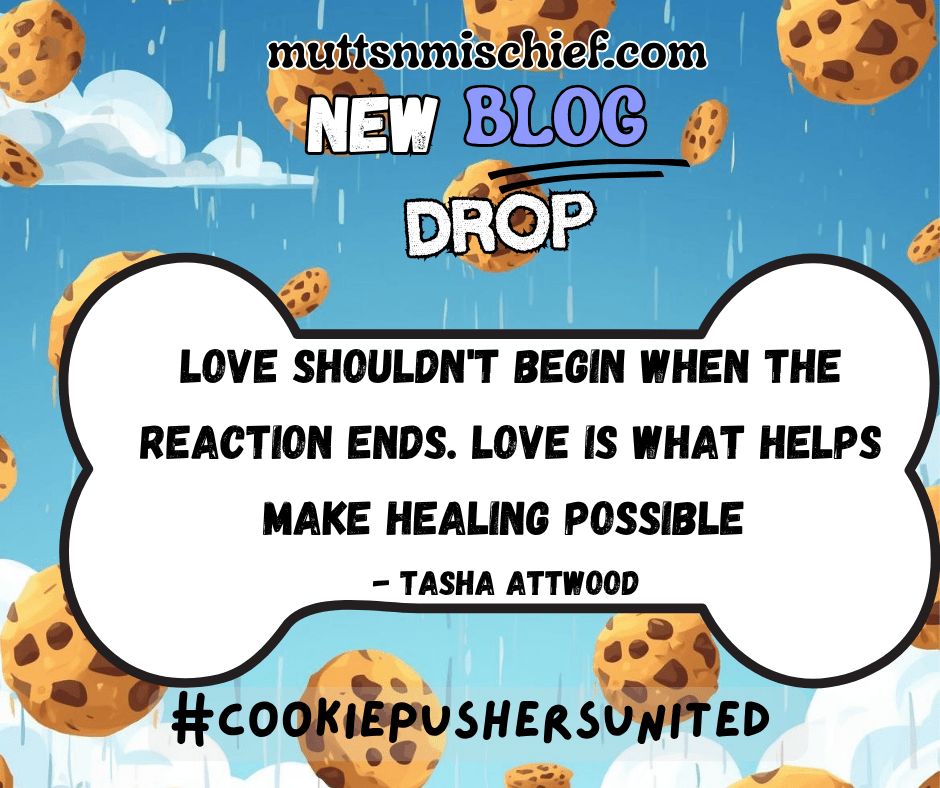
Because love shouldn’t begin when the reactions end.
Love is what helps make healing possible.
A nervous system notices what it practises noticing
This isn’t about forcing gratitude.
It’s about gently widening our attention.
When we repeatedly notice moments of safety, our brains slowly begin collecting evidence that safety exists.
Not all the time.
Not everywhere.
But enough to help us breathe a little easier.
The same principle supports many behaviour change programmes.
Neural pathways strengthen through repetition.
Attention shapes learning.
Small experiences matter.
Not because they are dramatic.
But because they happen again.
And again.
And again.
Today’s glimmer
Perhaps today your dog looked back at you on a walk.
Perhaps they chose to sniff instead of bark.
Perhaps they rested more deeply than yesterday.
Perhaps they asked for a cuddle.
Perhaps they simply existed peacefully beside you while you drank your tea.
Those moments count.
Not because they are spectacular.
But because they are real.
A Gentle Invitation
Before today ends, pause for thirty seconds.
Ask yourself:
“What was one tiny moment today where my dog—or I—felt just a little bit safer?”
Don’t judge it.
Don’t compare it.
Just notice it.
Because sometimes the smallest glimmer is enough to remind us that hope doesn’t arrive all at once.
It arrives quietly.
One moment at a time.
Perhaps healing isn’t about chasing extraordinary moments.
Perhaps it’s about becoming someone who notices ordinary ones.
Because when we begin collecting glimmers instead of only collecting evidence of struggle, we aren’t denying reality.
We’re allowing ourselves to see the whole picture.
And sometimes… that is where hope quietly begins.
Coming next in the Finding Glimmers series…
Part Three: Collecting Evidence of Safety
Together we’ll explore how repeated experiences of safety literally reshape the brain through experience-dependent neuroplasticity, activity-dependent synaptogenesis, and one of neuroscience’s most hopeful ideas: neurons that fire together, wire together.


Leave a Reply