Even today, some dog guardians worry that giving their dogs treats is a form of bribery. In reality, rewarding your dog isn’t a shortcut—it’s like depositing love into their emotional bank account. When you reward your dog with treats, you’re not just paying them for behaviour; you’re reinforcing learning by showing that certain behaviours lead to positive outcomes.
For example, if you’re redirecting unwanted barking, tossing a treat and cueing a “find it” game doesn’t reward the barking itself—it creates a new, positive association. The dog learns that the cue “find it” predicts something rewarding, helping to redirect emotional energy and change behaviour patterns.
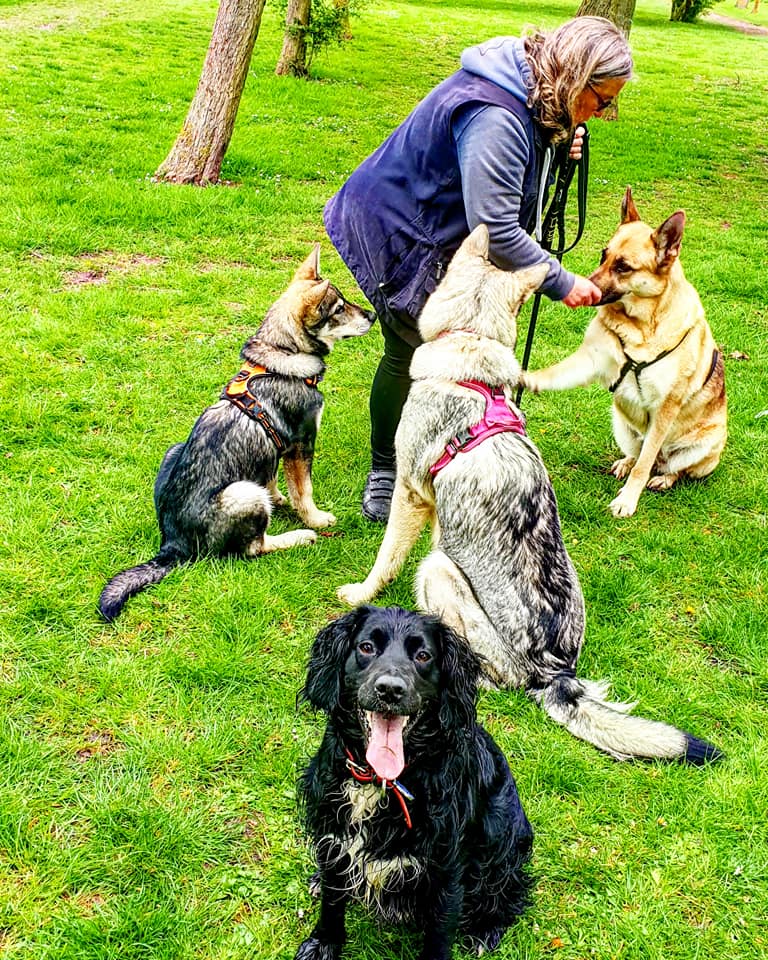
When your dog sees you and receives treats or verbal praise, a special part of their brain lights up with joy. This activity strengthens memory, emotional bonding, and learning.
We know this thanks to Dr. Gregory Berns’ functional MRI (fMRI) research, which explored how dogs’ brains respond to human voices. His studies revealed significant activity within the caudate nucleus—an area associated with positive emotions and reward—when dogs heard verbal praise from their guardians (Berns, 2015; Gábor et al., 2019).
This region sits within the limbic system, which governs emotions such as happiness, excitement, fear, anxiety, and aggression. When negative emotions dominate, the limbic system can override rational processing, leading to stress, overwhelm, and reactive behaviour. What many guardians label as “bad behaviour” is often simply a visible expression of an internal emotional state.
There is, in truth, no such thing as a “bad” dog—only dogs expressing emotions in response to their experiences. Just like humans, dogs react to both positive and negative stimuli, forming memories that shape future responses. It’s our duty of care to guide them compassionately through trauma, stress, and recovery.
This understanding isn’t new. It can be traced back to Ivan Pavlov’s pioneering work in the 1890s, when he demonstrated how animals learn through classical (Pavlovian) conditioning. By pairing a neutral sound—a bell—with food, dogs began to salivate at the sound alone, having learned that it predicted food (Thorndike, 1933; Chance, 2013).
Pavlovian conditioning remains one of the fundamental ways all animals, including dogs, learn. When a neutral cue (conditioned stimulus, CS) is consistently paired with something naturally rewarding (unconditioned stimulus, US), a conditioned response (CR) emerges—such as excitement, attention, or anticipation.
Pattern Games and Emotional Regulation
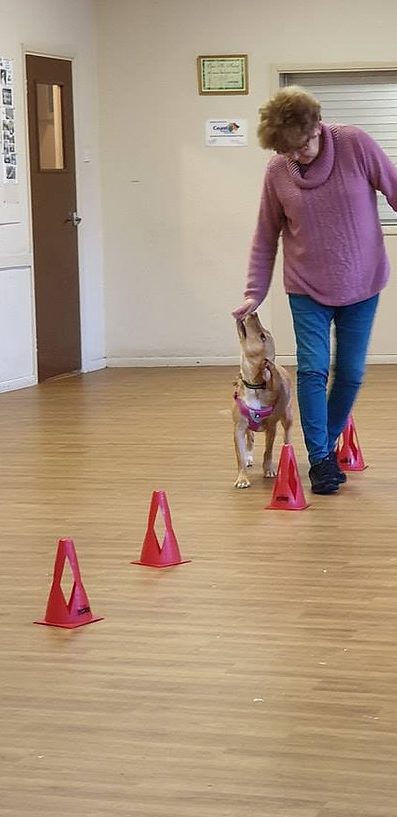
Pattern games are a brilliant modern application of Pavlov’s theory. They help dogs predict what will happen next, reducing anxiety and fostering trust. Leslie McDevitt’s Control Unleashed program includes the popular “1-2-3 Pattern Game,” which establishes a predictable rhythm between guardian and dog. This predictability lowers stress and helps dogs navigate triggering environments (McDevitt, 2019).
By practising these games at home first, dogs learn through generalisation to transfer this calm communication to more distracting environments. Each repetition strengthens the positive emotional association between the cue and reward—essentially rewiring emotional responses through classical conditioning.
From Guide Dogs to Cognitive Science
Humans have long used rewards such as food and play to reinforce desirable behaviour. Early examples include guide dogs in Germany as far back as 1916. A decade later, the United States established The Seeing Eye School, founded by Eliot Jack Humphrey, to train guide dogs for blind handlers (Humphrey & Warner, 2005; Pemberton, 2019).
Humphrey emphasised the importance of the relationship between dog and handler, advocating the use of vocal tone and body language to build rapport and trust.
As scientific curiosity about behaviour grew, so did the field of ethology—the study of animal behaviour in natural and captive environments. Nikolaas Tinbergen’s Four Questions (causation, development, function, and evolution) provided a framework for understanding why animals behave the way they do (Zawistowski & Reid, 2016).
Applying Tinbergen’s approach to dog training means asking:
Causation (Mechanism): What triggers this behaviour—fear, pain, environment, or learned association?
Development (Ontogeny): How has the dog’s behaviour changed over their lifetime?
Function (Adaptation): What purpose does the behaviour serve for the dog?
Evolution (Phylogeny): How has this behaviour evolved across species or breeds?
This holistic analysis leads to compassionate, effective behaviour modification grounded in science and empathy.
Cognitive Science and the Modern Canine Mind
With the rise of cognitive science, the outdated notion of the dog’s mind as a “blank slate” controlled only by reinforcement was rejected. Cognitive research now recognises that dogs possess innate behaviours, modular mental processes, and sophisticated cognitive functions that shape how they interpret and respond to the world (Hall et al., 2021).
Understanding these processes deepens our ability to teach and support dogs through positive, emotionally intelligent methods.
So, the next time someone says giving dogs treats is “bribery,” remember: over a century of scientific research has shown that rewards are not manipulation—they’re communication. Each positive reinforcement experience literally lights up your dog’s brain, strengthening emotional security, learning, and trust.
Every treat, every kind word, every joyful interaction helps your dog feel safe, connected, and capable of learning. Positive reinforcement builds relationships; punishment breaks them.
References
Berns, G. S. (2015). How dogs love us: A neuroscientist and his adopted dog decode the canine brain. New Harvest.
Chance, P. (2013). Learning and behavior (7th ed.). Cengage Learning.
Gábor, A., Kaszás, N., Miklósi, Á., Faragó, T., & Andics, A. (2019). Interspecific voice discrimination in dogs. Biologia Futura, 70(2), 121–127. https://doi.org/10.1556/019.70.2019.15
Hall, N. J., et al. (2021). Working dog training for the twenty-first century. Frontiers in Veterinary Science, 8, 646022. https://www.frontiersin.org/articles/10.3389/fvets.2021.646022
Humphrey, E., & Warner, L. (2005). Working dogs: An attempt to produce a strain of German Shepherds which combines working ability and beauty of conformation. Dogwise Publishing.
McDevitt, L. (2019). Control unleashed: Reactive to relaxed. Clean Run Productions.
Pemberton, N. (2019). Co-creating guide dog partnerships: Dog training and interdependence in 1930s America. Medical Humanities, 45(1), 92–101. https://doi.org/10.1136/medhum-2018-011626
Thorndike, E. L. (1933). A proof of the law of effect. Science, 77(1989), 173–175. https://doi.org/10.1126/science.77.1989.173-a
Zawistowski, S., & Reid, P. (2016). Dogs in today’s society: The role of applied animal behaviour. In J. Serpell (Ed.), The domestic dog: Its evolution, behavior and interactions with people (2nd ed., pp. 227–244). Cambridge University Press.


Leave a Reply