

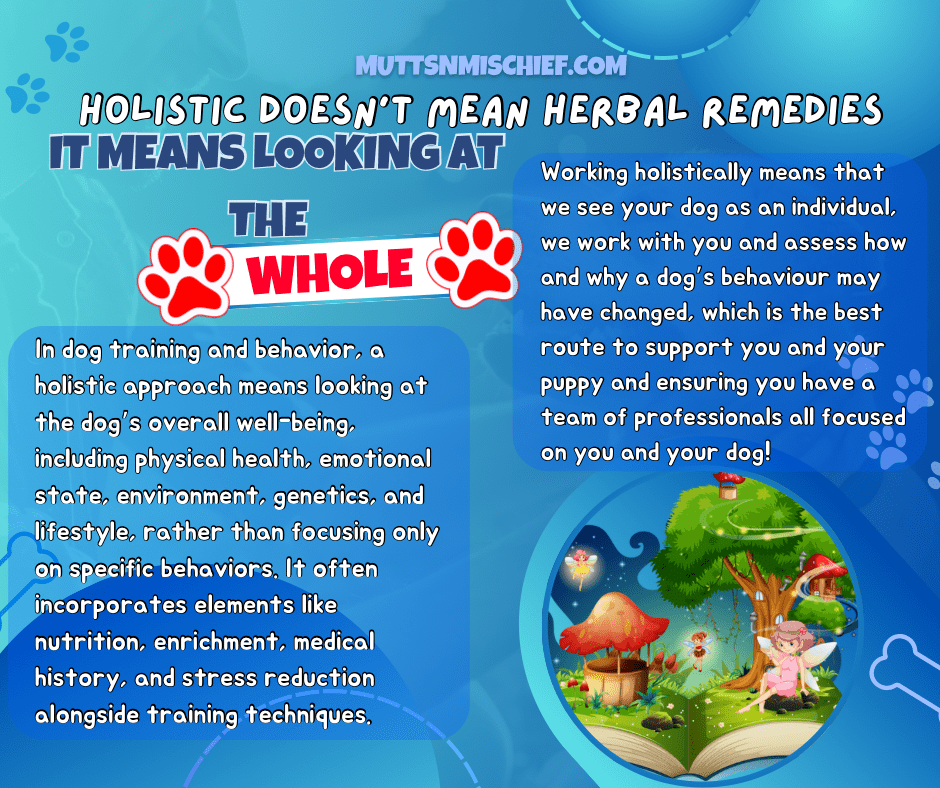
The word holistic is often misunderstood in the dog training world. Some associate it with herbal remedies, pseudoscience, or magical thinking, but in reality, a holistic approach is simply about seeing the bigger picture. It means considering the whole dog—mind, body, and environment—rather than just addressing surface-level behaviors.
What Does Holistic Really Mean?
A holistic approach to dog training and behavior means looking beyond obedience cues and quick fixes. It takes into account:
✅ Physical Health – Pain, illness, diet, and genetics all influence behavior. A dog in discomfort may struggle to learn or behave calmly.
✅ Emotional Well-being – Anxiety, fear, and past trauma shape how a dog interacts with the world. Addressing emotions is key to meaningful behavior change.
✅ Environment & Lifestyle – A dog’s surroundings, daily routine, enrichment, and exercise impact their overall behavior and stress levels.
✅ Communication & Relationships – Trust, choice, and understanding between dog and guardian create a foundation for successful training.
Science, Not Superstition
Holistic dog training is not about using herbs instead of medicine or ignoring evidence-based practices. It embraces behavioral science, veterinary knowledge, and a compassionate approach to individual dogs. By recognizing that behavior is a symptom of a dog’s overall state, we can make lasting, ethical changes that support their well-being.
A truly holistic trainer doesn’t just ask, “How do I stop this behavior?” but rather, “Why is this behavior happening, and how can I help my dog feel safe, confident, and understood?”
Holistic isn’t about magic—it’s about science, empathy, and seeing the whole picture.

 Mutts 'N' Mischief
Leave a comment