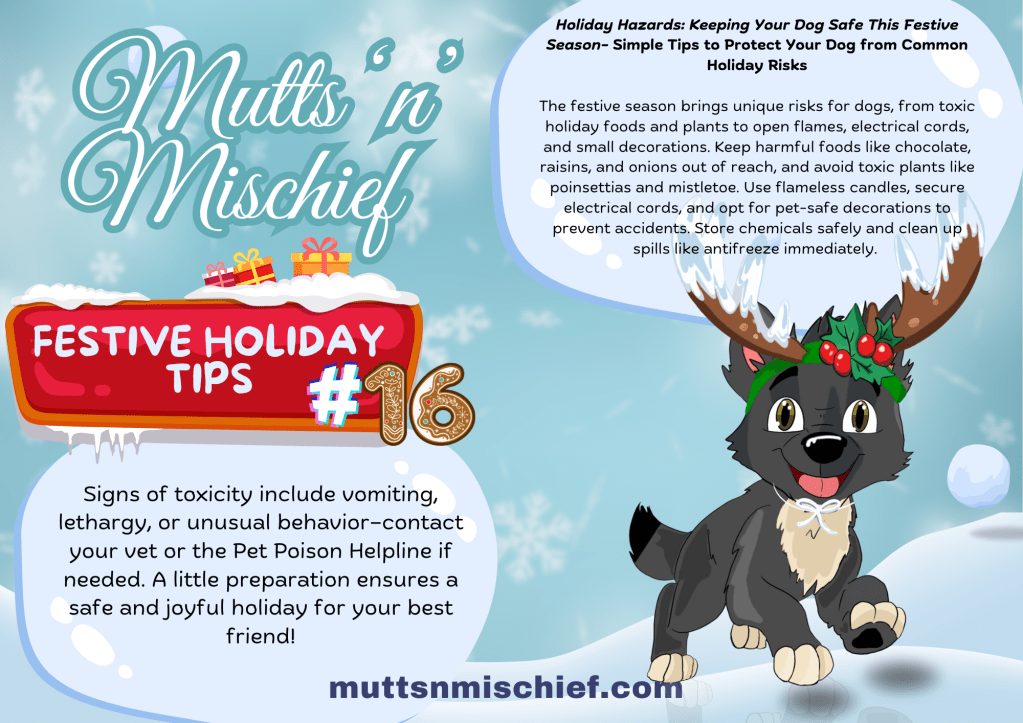
Holiday Hazards: Keeping Your Dog Safe This Festive Season- Simple Tips to Protect Your Dog from Common Holiday Risks
The festive season brings its own unique set of hazards that can pose risks to your dog in the home. From food leftovers to potential household chemicals, it’s easy to overlook dangers when everyone is busy with celebrations. By taking a few extra steps to dog-proof your home during the holidays, you can prevent accidents and keep your furry friend safe from harm.
Key Household Hazards to Watch For
1. Holiday Foods
Risk: Many holiday foods are toxic to dogs, such as chocolate, alcohol, raisins, onions, and garlic. Leftover food that is not properly stored can also cause gastrointestinal distress or food poisoning.
Prevention Tips:
• Keep all human food out of reach, especially during holiday meals. Be mindful of food scraps or plates left unattended, particularly when guests are over.
• Educate family and guests about the dangers of feeding dogs table scraps.
• Dispose of food waste in secure, dog-proof bins.
• Avoid giving your dog “treats” from your plate, no matter how tempting it may seem.
2 Holiday Plants
Risk: Certain Christmas plants, such as poinsettias, mistletoe, holly, and ivy, can be toxic to dogs if ingested.
Prevention Tips:
• Keep holiday plants in areas that are inaccessible to your dog.
• Consider using artificial plants as an alternative to real ones.
• Be aware of any greenery used in flower arrangements or as decor and make sure they are safe for pets.
3 Candles and Open Flames
Risk: Candles, especially those left unattended, can be a fire hazard, and they pose a danger to curious dogs who may knock them over or burn themselves.
Prevention Tips:
• Use flameless LED candles instead of real ones.
• Always keep candles out of your dog’s reach and never leave them unattended.
• Consider using candle holders with covers or placing candles in areas where pets cannot access them, such as on high mantels or in enclosed areas.
4 Electrical Cords and Decorations
Risk: Christmas lights and electrical cords can be enticing for dogs to chew on, potentially leading to electrocution or burns.
Prevention Tips:
• Hide cords behind furniture or use protective cord covers to prevent your dog from chewing them.
• Unplug lights and electrical decorations when not in use.
• Be mindful of cords hanging from trees or other decorations, which can be easy for dogs to grab or chew.
5 Toxic Household Chemicals
Risk: Household cleaning supplies, antifreeze, and other chemicals may be used more frequently during the holidays and pose significant dangers to dogs.
Prevention Tips:
• Store cleaning products and chemicals in secure cabinets that your dog cannot access.
• Be mindful of any antifreeze that may have spilled in the driveway or garage. Even small amounts can be toxic to dogs.
• Always use pet-safe cleaning products when possible.
6 Toys and Small Decor Items
Risk: Small decorations, such as ornaments, tinsel, and figurines, can be swallowed or chewed on, leading to choking or digestive blockages.
Prevention Tips:
• Choose decorations that are large enough that they cannot be swallowed or chewed on.
• Consider using unbreakable, pet-safe decorations or fabric-based garlands.
• Avoid small items that could pose a choking hazard, such as beads or miniature ornaments.
Signs of Toxicity or Injury
• Vomiting, diarrhea, or lethargy (could indicate ingestion of toxic foods or chemicals).
• Excessive drooling or difficulty swallowing (could indicate a choking hazard).
• Unusual behavior, such as panting, disorientation, or seizures (potential signs of poisoning or injury).
If you suspect your dog has ingested something harmful or is injured, contact your veterinarian immediately or call the Pet Poison Helpline.
Action Steps for Guardians
• Walk through your home and identify potential hazards before guests arrive or decorations go up.
• Create a “dog-free zone” where dangerous items, like food or candles, are kept safe from your dog’s reach.
• Train your dog to avoid certain areas or behaviors using positive reinforcement, particularly when it comes to interacting with decorations or kitchen counters.
• Keep emergency contact numbers for your vet, the Pet Poison Helpline, and animal hospitals in case of accidents.

 Mutts 'N' Mischief
Leave a comment