
Home for the Howl-idays – Stress-Free Travel Tips to Keep Your Dog Safe and Happy This Holiday Season
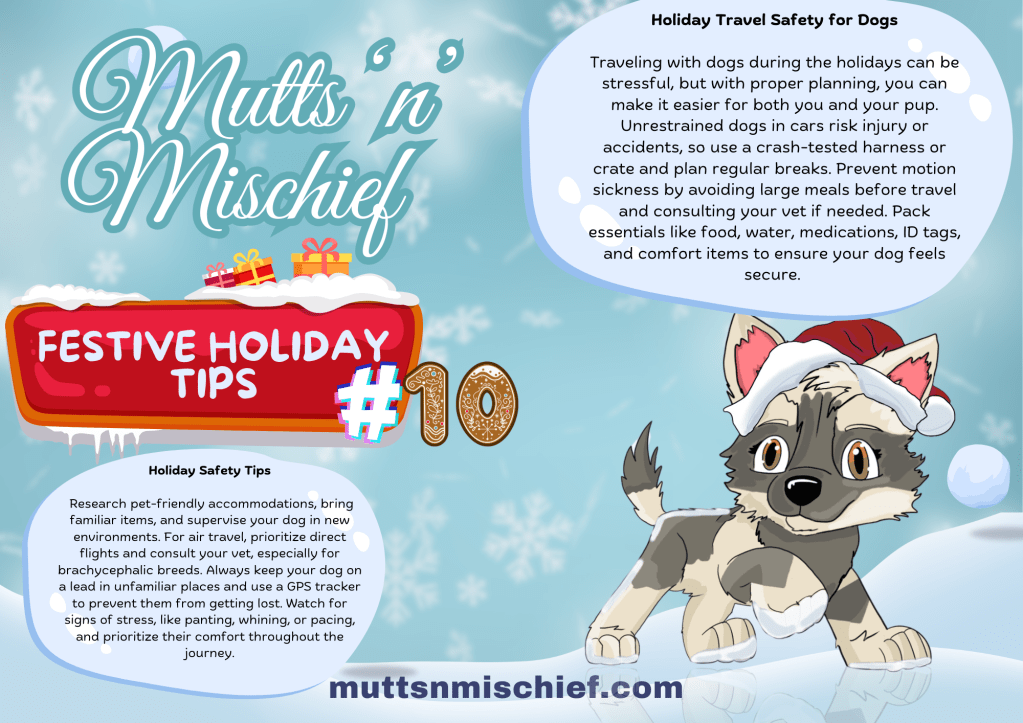
🚘 Traveling with dogs during the holidays can be stressful for both guardians and dogs, of course you want to see family and friends and perhaps even stay for a week or two, but what we have to remember is how we can make this time less stressful for our dogs. From long car journeys to staying in unfamiliar places, there are numerous potential risks, including accidents, anxiety, and exposure to unfamiliar hazards. By planning ahead and creating a safe, comfortable travel experience, guardians can minimize stress and keep their dogs secure.
🏡 Key Considerations for Safe Holiday Travel
Car Travel Safety
Risk: Unrestrained dogs can distract the driver, cause accidents, or be injured in a sudden stop or collision.
Prevention Tips:
Use a crash-tested harness, crate, or dog car seat to secure your dog in the vehicle.
Never allow your dog to sit on your lap or stick their head out of the window.
Plan regular breaks (every 2-3 hours or more frequent dependent on age) for bathroom needs, hydration, and stretching.
Preventing Motion Sickness
Risk: Some dogs experience nausea or vomiting during car rides, making travel unpleasant.
Prevention Tips:
Avoid feeding your dog a large meal within 2-3 hours of travel.
Try natural remedies like ginger or consult your vet for anti-nausea medication if needed.
Gradually acclimate your dog to car travel by taking short trips before the holiday.
Packing Essentials
Risk: Forgetting important items can lead to stress or health risks during the journey.
Checklist of Essentials:
A well-fitted collar with ID tags and up-to-date microchip information.
Lead, harness, and poop bags.
Enough food and water for the journey, plus bowls.
Medications, if required.
Comfort items such as a favorite blanket, toy, or bed.
A first-aid kit for dogs, including bandages, antiseptic wipes, and a digital thermometer.
Staying in Pet-Friendly Accommodation
Risk: Unfamiliar environments can cause stress or prompt dogs to engage in undesirable behaviors like barking or chewing.
Prevention Tips:
Research and book pet-friendly accommodations in advance.
Bring familiar items (e.g., their bed or blanket) to create a sense of security.
Use a portable crate or playpen if your dog is crate-trained, as this can provide a safe space.
Supervise your dog to prevent them from chewing furniture or damaging the property.
Holiday Travel by Plane
Risk: Air travel can be stressful and potentially harmful, especially for brachycephalic breeds (e.g., Bulldogs, Pugs).
Prevention Tips:
Book direct flights to minimize travel time.
Use an airline-approved carrier for smaller dogs flying in the cabin.
Ensure your dog is healthy enough for air travel by consulting your vet beforehand.
Identification and Safety Precautions
Risk: Dogs can become lost in unfamiliar environments.
Prevention Tips:
Use a GPS tracker on your dog’s collar during the trip.
Carry a recent photo of your dog in case you need to search for them.
Keep your dog on a lead at all times in new or busy environments and especially in the countryside!
🚘 Signs of Travel-Related Stress in Dogs
Panting, pacing, or whining.
Excessive drooling or lip licking.
Attempts of escape or trying to sit on driver/ front passengers lap
🏡 Action steps for guardians:
Ensure your dog is acclimatised to the car.
Take measures for motion sickness.
Check and double check your checklist.
Plan your journey for toilet breaks and to stretch their legs.

 Mutts 'N' Mischief
Leave a comment