🌺 Holiday Greens and not the vegetables – Protecting Your Dog from Toxic Christmas Plants
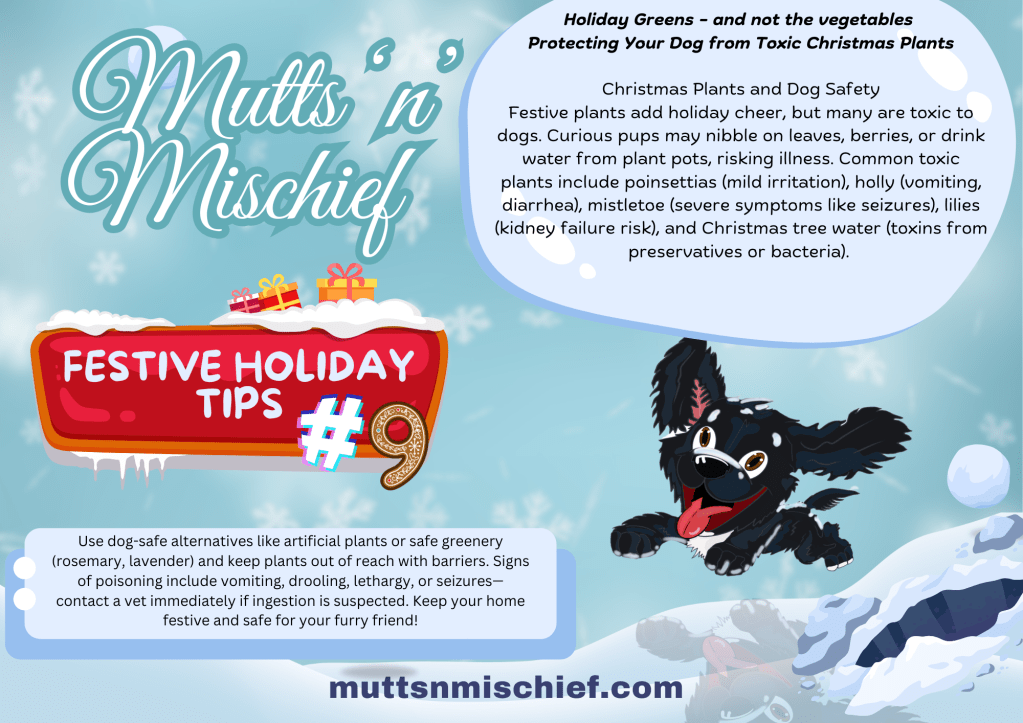
🌳 Festive plants are beautiful and bring holiday cheer into the home, but many are toxic to dogs. Dogs, especially puppies, may be curious about plants, nibbling on leaves, berries, or even drinking the water from plant pots or Christmas trees. Awareness of which plants are dangerous and how to keep them out of reach is essential to ensure your dog’s safety during the holiday season.
🌺 Toxic Christmas Plants and Their Effects
Poinsettias
Risk Level: Mildly toxic.
Symptoms: Drooling, mild vomiting, or irritation in the mouth and stomach if ingested.
Tips: While less toxic than commonly believed, poinsettias should still be kept out of reach to avoid discomfort.
Holly (Ilex)
Risk Level: Moderately toxic.
Symptoms: Vomiting, diarrhea, drooling, and abdominal pain. The spiny leaves can also irritate the mouth and throat.
Tips: Opt for artificial holly if you want the look without the risk.
Mistletoe
Risk Level: Highly toxic.
Symptoms: Vomiting, diarrhea, breathing difficulties, and in severe cases, a drop in heart rate or seizures (depending on the amount ingested).
Tips: Hang mistletoe well out of reach or use a faux alternative.
Lilies (various species)
Risk Level: Highly toxic.
Symptoms: Even small amounts can cause vomiting, diarrhea, or lethargy. Some lily species may cause kidney failure.
Tips: Avoid lilies altogether in homes with dogs.
Yule/ Christmas Tree Water
Risk Level: Toxic if contaminated with preservatives, fertilizers, or stagnant bacteria.
Symptoms: Vomiting, diarrhea, or drooling if ingested.
Tips: Cover the tree’s water reservoir with a sturdy tree skirt or use a covered stand.
🌳 Non-Toxic Alternatives
For dog-safe holiday decorations:
A yule log out of the reach of your dog.
Use artificial versions of toxic plants.
Decorate with dog-safe greenery such as rosemary, lavender, or ferns.
🌺 Signs of Plant Poisoning in Dogs
If your dog has ingested a toxic plant, look for:
Vomiting, diarrhea, or drooling.
Pawing at the mouth or difficulty swallowing.
Lethargy, tremors, or seizures (in severe cases).
If you suspect poisoning, contact your vet or a pet poison control hotline immediately.
🌳 Action Steps for Guardians
Identify and remove potentially toxic plants from accessible areas.
Use physical barriers (like baby gates or plant stands) to keep plants out of reach.
Educate guests not to bring flowers or plants without checking their safety for pets first.

 Mutts 'N' Mischief
Leave a comment