

Chilly Paws, Safe Walks – Winter Weather Tips to Keep Your Dog Protected and Happy Outdoors
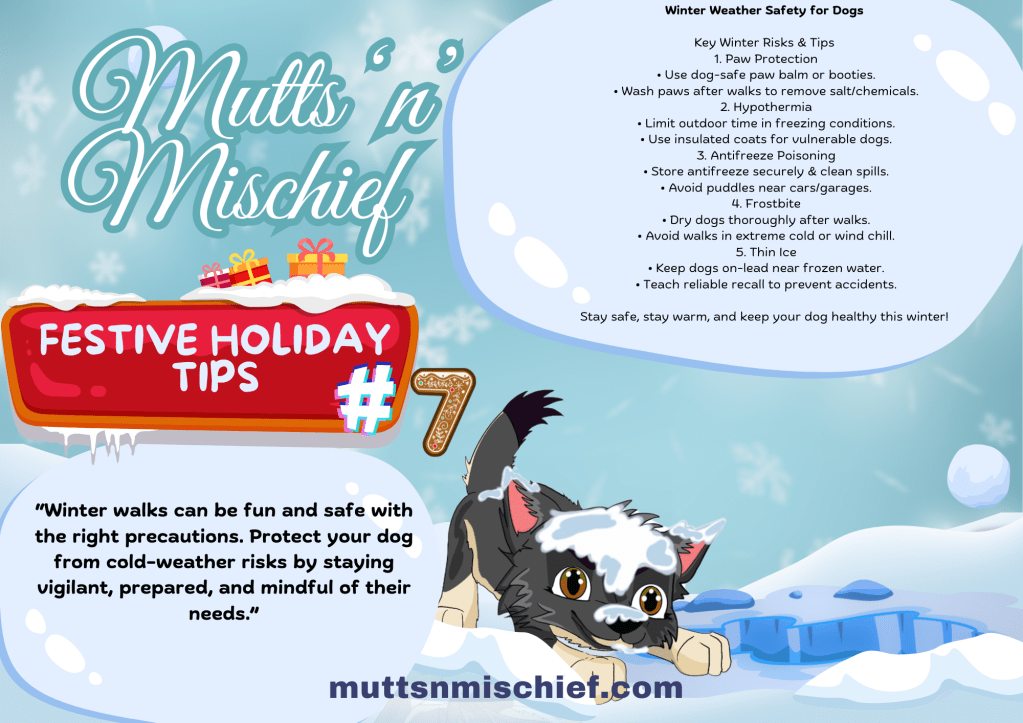
Winter brings hazards like icy pavements, freezing temperatures, and toxic substances, all of which pose risks to dogs. Frostbite, hypothermia, and exposure to harmful chemicals like antifreeze can quickly turn a routine winter walk into an emergency. Understanding how to protect your dog during cold weather is vital for keeping them healthy and safe.
Key Risks and How to Address Them
Paw Protection
Risk: Ice, grit, and salt used on roads and pavements can irritate or burn paw pads. Additionally, dogs may ingest harmful substances while licking their paws.
Prevention Tips:
Use dog-safe paw balm or wax before walks to create a protective barrier.
Consider booties for sensitive dogs or those walking on heavily treated areas.
Wash your dog’s paws with warm water after walks to remove salt and chemicals.
Hypothermia
Risk: Prolonged exposure to cold can cause a dangerous drop in body temperature, especially for small, short-haired, or senior dogs.
Prevention Tips:
Limit outdoor time, especially in freezing conditions.
Use a well-fitted, insulated coat for dogs that are more susceptible to the cold.
Watch for signs of hypothermia, such as shivering, lethargy, or pale gums, and seek immediate veterinary care if suspected.
- Antifreeze Poisoning
Risk: Antifreeze contains ethylene glycol, a sweet-tasting chemical that is highly toxic to dogs. Even a small amount can cause kidney failure.
Prevention Tips:
Store antifreeze securely and clean up spills immediately.
Consider using pet-safe antifreeze alternatives that are less toxic.
Monitor your dog during walks to prevent them from licking puddles near parked cars or garages.
- Frostbite
Risk: Frostbite can affect extremities like the tail, ears, and paws, particularly in freezing weather.
Prevention Tips:
Avoid walking your dog during extreme cold or wind chills.
Dry your dog thoroughly after walks, paying special attention to wet fur or icy patches.
Use a hairdryer when possible on a low heat setting for dogs who tend to get balls and pockets of snow frozen to their fur. You can also try a gentle and warm bath to melt them and coconut oil can also be used to very gently remove from the fur with no pulling.
- Thin Ice on Bodies of Water
Risk: Dogs may wander onto frozen ponds or lakes that cannot support their weight.
Prevention Tips:
Keep dogs on-lead in areas with frozen water.
Teach a reliable recall to prevent your dog from straying onto unsafe surfaces.
Action Steps for Guardians
Monitor weather conditions and adjust outdoor activities accordingly.
Create indoor enrichment activities (e.g., scent games or puzzle toys) for days when outdoor exercise isn’t safe.
Carry a towel and first-aid kit on winter walks for emergencies.

 Mutts 'N' Mischief
Leave a comment