Festive Foods and Doggy Dangers: What NOT to Share This Holiday Season – A Guide to Keeping Your Dog Safe from Holiday Treats and Toxic Temptations
The holiday season introduces a variety of foods into households that can be dangerous—or even deadly—for dogs. Because this food maybe a festive novelty and you don’t consume it all year round, it can be easy to forget that some of the foods we enjoy can be toxic to our dogs, especially because we love them and want to share our food with them during the festive period.
Many traditional festive treats contain ingredients that are toxic, while others can cause blockages, choking, or gastrointestinal issues. Understanding what’s harmful and keeping these foods out of reach is critical for ensuring your dog’s safety during celebrations.
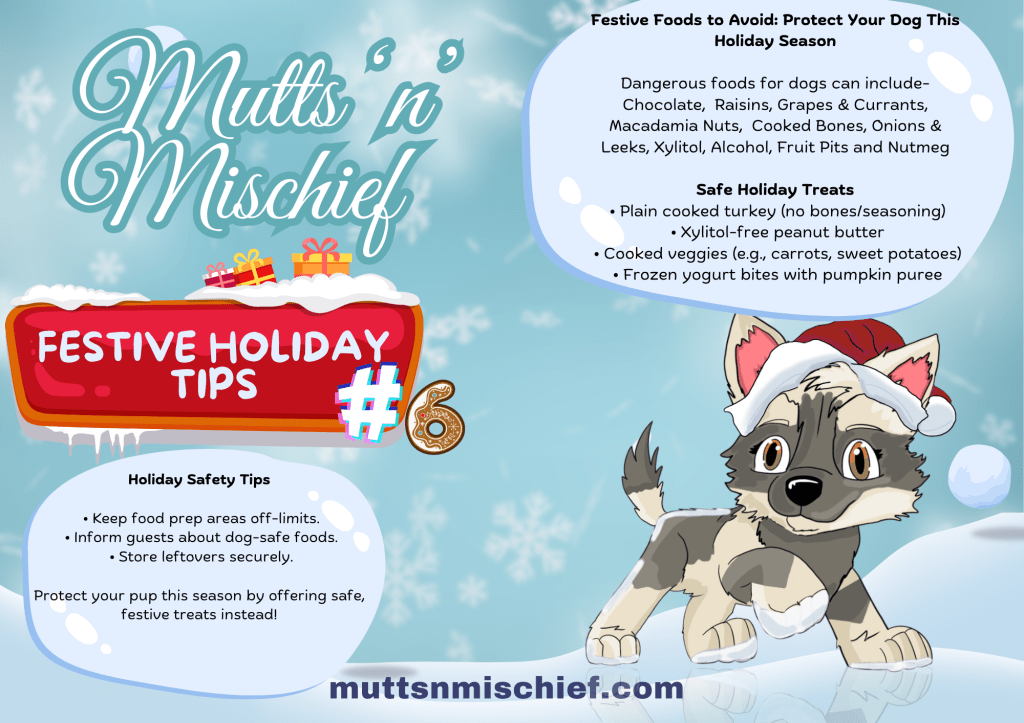
Common Dangerous Foods and Why They’re Harmful
- Chocolate: Contains theobromine, which dogs metabolize poorly, leading to symptoms like vomiting, diarrhea, seizures, or even death in severe cases. Dark chocolate and baking chocolate are particularly dangerous.
- Raisins, Grapes, and Currants: Even small amounts can lead to acute kidney failure in dogs. Watch out for these in fruitcake, mince pies, and puddings. Even though the exact cause is unknown, grapes and raisins can cause kidney failure in some dogs. Symptoms of toxicity include vomiting, lethargy, and a decrease in appetite. Dogs who consume grapes or raisins should be closely monitored and seen by a vet as soon as possible.
- Macadamia Nuts: Macadamia nuts can cause weakness, tremors, and elevated body temperature in dogs. Although the exact cause is still unclear, ingestion of even small amounts can result in these symptoms, which typically resolve within 48 hours with treatment.
- Cooked Bones: While raw bones can sometimes be safe, cooked bones become brittle and can splinter, causing choking, internal damage, or blockages.
- Onions and Leeks: Found in stuffing, gravies, and soups, these foods can cause anemia by damaging red blood cells leading to anemia. This can result in symptoms like weakness, vomiting, and even organ failure if consumed in large amounts. Both raw and cooked forms can be harmful.
- Xylitol: Xylitol, commonly found in sugar-free gum, candies, and baked goods, can cause a rapid drop in blood sugar levels in dogs, leading to hypoglycemia (low blood sugar), which can result in seizures, liver failure, and even death if consumed in large enough quantities. Always check ingredient labels for xylitol before offering any treats.
- Alcohol: Even small quantities can cause poisoning, with symptoms like vomiting, disorientation, and slowed breathing.
- Pitted fruits such as cherries, peaches and plums: The pits of fruits like cherries, peaches, and plums contain cyanide, which is toxic to dogs. Even though swallowing a pit might not cause immediate poisoning, it could lead to an intestinal blockage or choking. Be cautious with fruit bowls that may attract dogs during holiday gatherings.
- Nutmeg: Nutmeg, a common spice in holiday baking, can be toxic to dogs when ingested in large amounts. It can cause symptoms such as disorientation, increased heart rate, and high blood pressure. It’s often found in baked goods, but even small amounts can cause discomfort or illness in dogs.
Safe Alternatives – offer festive, dog-friendly treats such as:
Peanut butter (unsweetened and xylitol-free)
Plain cooked turkey (without skin, bones, or seasoning)
Non smoked salmon
Carrots, potatoes, peas, green beans, swede, brussels sprouts, parsnips, new and sweet potatoes, unbuttered mashed potatoes, small amount of cooked eggplant, fresh cranberries, cauliflower
Frozen yogurt bites with pureed pumpkin or apple
Lamb meat no bone
Prawns (fresh and unseasoned)
Eggs
Action Steps for Guardians
Keep food prep and dining areas off-limits to dogs. Use barriers like baby gates if needed.
Educate guests about dog-safe foods and enforce a strict “no feeding the dog” rule.
Store leftovers securely in the fridge or sealed containers.
Finally, we all have them, well meaning relatives, friends and neighbours who purchase our dogs premanufactured stockings full of terrible treats we wouldn’t give (and please don’t donate them to rescue dogs, my rule of thumb is don’t donate anything you wouldn’t allow your dog to eat).
So here are some of the common dog treats to steer clear of and why:
- Rawhide Chews
Why to Avoid:
Rawhide chews are a popular treat, but they pose several risks. Rawhide can be difficult for dogs to digest, leading to potential gastrointestinal blockages or choking if large pieces are swallowed. Additionally, rawhide chews are often treated with chemicals during manufacturing, such as bleach or artificial preservatives, which can be harmful to your dog. If the rawhide comes from unregulated sources, it may also be contaminated with bacteria.
Alternatives:
Look for natural, digestible chews such as antlers, bully sticks, or rubber chew toys, which are safer for your dog and less likely to cause digestive issues.
- Chewy and Sticky Treats
Why to Avoid:
Chewy treats or sticky treats, such as certain types of soft treats, often contain high levels of sugar and artificial ingredients. These treats can contribute to weight gain, dental issues, and hyperactivity, especially if given in large quantities. Additionally, the sticky texture can get stuck in your dog’s teeth, leading to plaque build-up and gum issues.
Alternatives:
Opt for low-calorie, dental chews that help clean teeth while satisfying your dog’s urge to chew. You can also offer carrot sticks or frozen treats like plain peanut butter in ice cube trays for a healthy, engaging snack.
- Treats with Artificial Additives (Preservatives, Colors, and Flavors)
Why to Avoid:
Many mass-produced dog treats contain artificial colors, flavors, and preservatives to enhance their appeal or extend shelf life. While these additives are generally safe in small quantities for humans, they can cause allergic reactions or gastrointestinal upset in some dogs. Over time, these additives can also contribute to behavioral changes or health problems.
Alternatives:
Look for treats with natural ingredients such as dehydrated meat, vegetables, or fruits. Single-ingredient treats like freeze-dried liver or chicken are great choices for a healthy snack.
- Biscuits with High Sugar or Salt Content
Why to Avoid:
Many manufactured dog biscuits or treats, especially holiday-themed ones, are loaded with sugar, salt, or sweeteners like xylitol (which is toxic to dogs). Excess sugar can contribute to weight gain and diabetes, while too much salt can cause dehydration, kidney issues, or sodium ion poisoning.
Alternatives:
Choose treats that are low in salt and sugar or those made specifically for dogs with special dietary needs. Homemade treats using ingredients like oats, pumpkin, and peanut butter (without xylitol) are often healthier options.
- Artificially-Flavored or -Scented Treats
Why to Avoid:
Treats that are artificially flavored or scented (such as with bacon or cheese) often contain synthetic chemicals that can be hard for your dog to process. These treats might be tempting, but they may cause food sensitivities, upset stomachs, or even allergic reactions.
Alternatives:
Look for treats that are naturally flavored using ingredients like real meat or poultry, sweet potatoes, or carrots. Dogs usually prefer the authentic taste, and these treats are much healthier.
- Large, Hard Bones or Chews
Why to Avoid:
Hard bones or treats, like large marrow bones or very hard chews, can be dangerous for dogs that are avid chewers. They may cause broken teeth or jaw strain, particularly in small breeds or older dogs with weaker teeth. Additionally, these bones can splinter into sharp pieces, leading to choking hazards or digestive injuries.
Alternatives:
Instead of hard bones, try fish skins, beef bark, yak chews, dried trachea, ears and so on. The more natural the treat the better! Therubber chew toys that are designed for heavy chewers or safer options like soft, durable chews that are gentler on teeth but still provide entertainment.
- Soft, High-Calorie Treats
Why to Avoid:
While soft treats can be easy to give as rewards, many are packed with calories, sugars, and fillers that can contribute to obesity, particularly in less active dogs. These treats may seem appealing but can quickly lead to weight gain if given too frequently.
Alternatives:
For a lower-calorie option, consider freeze-dried treats or homemade low-calorie snacks like frozen fruit pieces (such as blueberries) or small pieces of cooked chicken or turkey.
- Low-Quality Chews or Treats Made in Unregulated Countries
Why to Avoid:
Many mass-produced dog treats, particularly those made overseas in unregulated facilities, can pose health risks due to contamination with harmful chemicals, bacteria, or poor-quality ingredients. For example, treats made in countries with less stringent manufacturing regulations may contain harmful levels of heavy metals or toxic chemicals.
Alternatives:
Buy high-quality chews from reputable brands that prioritize safety and quality control. Look for products that are Made in the USA or Europe, where safety standards are more stringent.
Key Takeaways for Dog Guardians During the Holidays:
Read the Ingredients: Always check the label for artificial additives, preservatives, sugars, or salt content.
Choose Natural Alternatives: Opt for natural chews or single-ingredient treats without unnecessary additives.
Watch for Choking Hazards: Avoid hard treats that could splinter or break teeth, especially for small or older dogs.
Moderation Is Key: Even healthy treats should be given in moderation, especially during a time when you may be more generous with food.
By being mindful of the types of treats you offer during the holidays, you can ensure your dog enjoys the festivities safely, without any harmful side effects!

 Mutts 'N' Mischief
Leave a comment