🎄Mutts ‘n’ Mischief Festive holiday tip #1 🎄
🐾 Why Alcohol and Dogs Don’t Mix—and How to Celebrate Safely
🌟 The holidays are a time to relax, unwind, and enjoy special moments with loved ones. But amidst the festive cheer, it’s important to remember that our dogs are part of the family too. Just as we take steps to keep them safe every day, we need to be extra mindful during holiday celebrations.
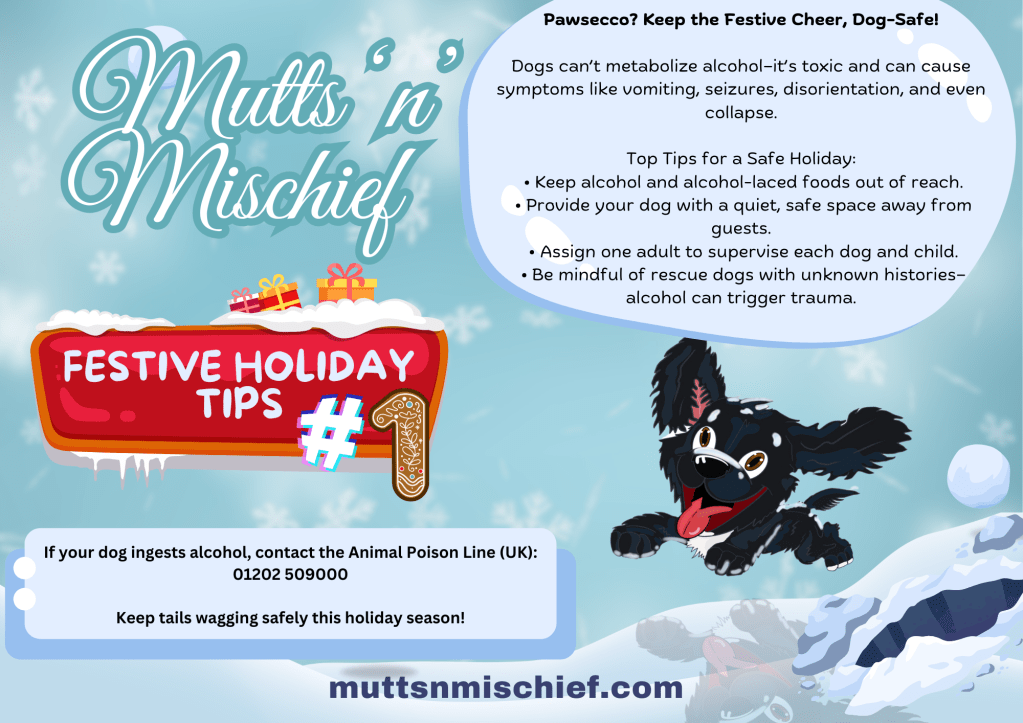
Festive gatherings often bring family, friends, and a house full of excitement. While we plan ahead by designating drivers for drinking, it’s equally important to designate one responsible adult per dog to oversee their safety during the festivities.
🐾 Likewise, a separate adult should be appointed for each child in the household.
🌟 By assigning one adult to one dog and another to one child, we significantly reduce the risk of incidents involving dogs and children. This strategy ensures that everyone, including your dog, has a safer and happier holiday. Remember, it’s not just children who need supervision—dogs sometimes need protection from well-meaning but unfamiliar or overexcited visiting adults, too.
🐾 Every year during Christmas and New Year, dog professionals are inundated with calls from people dealing with holiday-related incidents involving their dogs. Rescue centers often experience an influx of surrendered dogs, and unfortunately, it’s the dogs who bear the brunt of these issues.
🌟 If you’ve adopted a rescue dog this year and are uncertain about their history or prior experiences around alcohol—or if, like me, you don’t drink—it’s essential to be aware that alcohol can trigger unexpected behavior changes in some dogs. Sadly, many dogs have experienced trauma in the presence of alcohol. To ensure your dog’s comfort and safety, provide them with a secure, quiet space away from the party and tipsy guests who may stumble in to “fuss the doggy.”
🐾 Alcohol and Dogs: A Dangerous Mix
🌟 It’s crucial to keep alcohol and alcohol-laced foods—such as those cooked, roasted, or soaked in spirits—completely out of reach of your dog. Dogs cannot metabolize alcohol, and even small amounts can be highly toxic. If you’re enjoying foods or drinks that contain alcohol, make sure your dog is safely tucked away in their own space and isn’t acting as the “floor clean-up crew.”
🐾 If your dog consumes alcohol in any form, contact the Animal Poison Line in the UK at 01202 509000. Their website (https://www.animalpoisonline.co.uk/) is also a great resource for additional guidance.
Signs of Alcohol Intoxication in Dogs
Be alert for the following signs if you suspect your dog has ingested alcohol:
Vomiting or retching
Hypothermia (dangerously low body temperature)
Seizures or tremors
Shortness of breath
Depression of the central nervous system
Diarrhea (the body’s attempt to expel the toxin)
Disorientation, similar to human drunkenness
Collapse
Because dogs cannot metabolize alcohol, it quickly builds up in their bloodstream. The severity of symptoms depends on the individual dog and the amount consumed, but the effects can be serious—and even fatal.
🍾 Keep the Festivities Dog-Safe
The holidays should be a time of joy for the whole family, dogs included. By planning ahead and being mindful of their needs, we can ensure our beloved dogs stay safe, happy, and out of harm’s way this festive season.

 Mutts 'N' Mischief
Leave a comment