Youtube audio link https://youtu.be/mW1Tagtl6oE?si=AjX78Io9dMdWdogo
We cannot always see when there maybe a health concern for our dogs. As humans we tend to look at sickness in a clinical way as the media has taught us.
Vomiting, diarrhoea, constipation, blood in stools, lethargy, pale gums or an acute trauma such as a limps, cut pad, nose, accident or injury from an altercation with another dog or another incident requiring immediate treatment.
These are all the typical ways in which we understand that a dog or a person maybe ill.
I’ve known many people to say the dog occasionally limps, is occasionally sick, has diarrhoea, can be lethargic, off their food, stops on walks, hides before a walk, mouths or growls a lot and occasionally air snaps. Has been banned from the groomer or daycare and these symptoms are most often overlooked and ignored.
There’s no correlation to these types of problems warranting a visit to the vets.
A quick google search and the suggested results of people ask:
How long should I wait to take my dog to the vet for vomiting and diarrhoea?
When should I take my dog to the vet for diarrhoea?
What if my dog has vomiting and diarrhoea but is acting fine?
What does it mean when your dog is having diarrhoea, throwing up, and not eating?
How to know if a dog limping is serious?
What does it mean if your dog is limping?
Why is my dog chasing his tail?
Is it normal for dogs to chase and bite their tail?
Is it bad if my dog eats grass?
Why do dogs drag their bum on the ground?
This is no laughing matter, that google is suggesting these results, this shows a huge failing of our industry in educating dog guardians on the need to go to the vet for very common illnesses and symptoms.
Vomiting, diarrhea, UTI’s, can be a huge risk in humans, we know humans can deteriorate very fast, experience low blood sugar, dehydration, delirium and so much more from these symptoms, it is no different for animals.
Very few people on a generalised scale are aware dogs can suffer with headaches especially in the summer heat and this can be a precursor for changes in behaviour such as growling, air snapping and biting, in a dog who would otherwise never show these types of behaviours.
As humans and adults especially, many of us downplay very serious illnesses such as vomiting, diarrhoea, UTI’s, headaches, flu etc and these illnesses can quickly develop into a much more serious condition, which then requires us to go into the hospital.
We then apply this to our dogs and down play their illnesses and isolate it to a one off, or they ate grass so that’s why they are bringing up bile or grass, but what about the root cause of the why? Why is the dog being sick in the first place, why are they seeking out grass? If we were to place a dog in a safe dog herbal garden they most likely would not select grass at all and consume a plant which will indicate their possible symptoms, animals are amazing in their own self selection knowledge. So if your dog had the opportunity they can and would show you through self selection what is wrong. Grass is not the old wives tale of dogs eating grass to be sick, but because there is something lacking either in their diet or in availability of herbal plants to meet the need of how ill they are feeling.
Help your dog heal itself is an amazing book by Caroline Ingraham which can help you to begin to learn about the fundamentals of the uses of herbs and your dog’s ability to communicate how they feel.
From my research down this particular rabbit hole, researchers have found that their research conclusions draw to five most commonly reported concerns, relating to owner practices:
Pedigree and poor breeding practices (Rooney and Sargan, 2010), (Packer et al., 2015)
Obesity (Degeling, Kerridge and Rock, 2013), (Luno et al, 2018)
Dog behaviour and training (Blackwell, Bradshaw and Casey, 2013), (Casey et al., 2014)
Dog purchasing and relinquishing (Sandøe et al., 2017), (Summerton, 2015)
Dog companionship and being left alone for long periods of time (www.rspca.org.uk, n.d.), (www.pdsa.org.uk, n.d.), (Norling and Keeling, 2010)
In my personal opinion the following text is unfair to dog guardians in stating that vets and charities have heavily aimed to educate dog guardians with extensive knowledge and that some owners spend money on their dogs clothes and grooming as this makes their dog happy. (McGreevy and Bennett, 2010).
That most dogs are obese and suffer as a result, many dog behaviourists and trainers tout dominance based theories in their practice despite welfare concerns, guardians fail to correctly interpret their dogs behaviours, do not understand the serious signs and symptoms of common diseases and illnesses in older dogs, leave their dogs for long periods of time, yet claim to love them. (Philpotts, Dillon and Rooney, 2019)
Looking at this in a clinical way and not curling up under a blanket reassuring myself I am not a part of these opinions, I can see how they have arrived at these conclusions within their research, however, they are not indicating this to be you or I, they are nodding this in the direction of compulsion based dog professionals, dog guardians who do have poor attitudes towards their dogs and not the guardians who are reading this, avidly read other blogs, and participate in do no harm based practices, learning and circles.
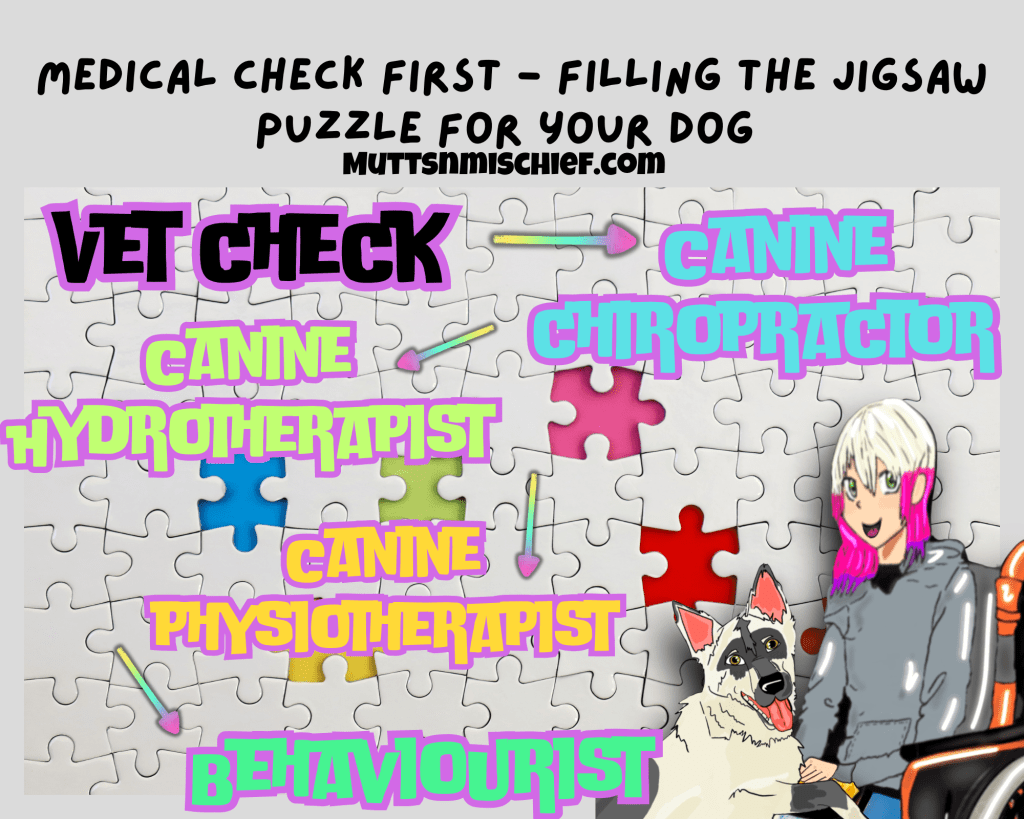
Both myself and the researchers of this paper reach the same conclusion, the classification of saying that dog guardians need education is a massive oversimplification, what is needed is the recognition of the good dog guardians, the good dog professionals and a multidisciplinary approach in education, so that the education and support for dog guardians is more of a model like the NHS.
Which rounds up nicely to my next blog as highlighted by one of the guardians in last weeks blog, vets and their relationship, customer service, professionalism, ability to listen, give appropriate time within an appointment and work towards fostering an integrative relationship with the guardian, the patient and other professionals to treat just one patient!
References
Rooney, N. and Sargan, D. (2010). Welfare concerns associated with pedigree dog breeding in the UK. Animal Welfare, 19(S1), pp.133–140. doi:https://doi.org/10.1017/s0962728600002335.
Packer, R.M.A., Hendricks, A., Tivers, M.S. and Burn, C.C. (2015). Impact of Facial Conformation on Canine Health: Brachycephalic Obstructive Airway Syndrome. PLOS ONE, [online] 10(10). doi:https://doi.org/10.1371/journal.pone.0137496.
Degeling, C., Kerridge, I. and Rock, M. (2013). What to Think of Canine Obesity? Emerging Challenges to Our Understanding of Human–Animal Health Relationships. Social Epistemology, 27(1), pp.90–104. doi:https://doi.org/10.1080/02691728.2012.760662.
Luno, I.; Palacio, J.; Garcia-Belenguer, S.; Gonzalez-Martinez, A.; Rosado, B. Emotional eating in companion dogs: Owners’ perception and relation with feeding habits, eating behaviour, and emotional state. J. Vet. Behav. Clin. Appl. Res. 2018, 25, 17–23.
Blackwell, E.J., Bradshaw, J.W.S. and Casey, R.A. (2013). Fear responses to noises in domestic dogs: Prevalence, risk factors and co-occurrence with other fear related behaviour. Applied Animal Behaviour Science, 145(1-2), pp.15–25. doi:https://doi.org/10.1016/j.applanim.2012.12.004.
Casey, R.A., Loftus, B., Bolster, C., Richards, G.J. and Blackwell, E.J. (2014). Human directed aggression in domestic dogs (Canis familiaris): Occurrence in different contexts and risk factors. Applied Animal Behaviour Science, [online] 152(152), pp.52–63. doi:https://doi.org/10.1016/j.applanim.2013.12.003.
Sandøe, P., Kondrup, S.V., Bennett, P.C., Forkman, B., Meyer, I., Proschowsky, H.F., Serpell, J.A. and Lund, T.B. (2017). Why do people buy dogs with potential welfare problems related to extreme conformation and inherited disease? A representative study of Danish owners of four small dog breeds. PLOS ONE, [online] 12(2), p.e0172091. doi:https://doi.org/10.1371/journal.pone.0172091.
Summerton, K. (2015). Reasons for relinquishing dogs. Veterinary Record, 177(12), pp.320–320. doi:https://doi.org/10.1136/vr.h5056.
http://www.rspca.org.uk. (n.d.). #DogKind: Understanding Your Dog | RSPCA. [online] Available at: https://www.rspca.org.uk/adviceandwelfare/pets/dogs/kind.
http://www.pdsa.org.uk. (n.d.). Past PAW reports and summaries. [online] Available at: https://www.pdsa.org.uk/what-we-do/pdsa-animal-wellbeing-report/past-reports?alias=get-involved%2four-campaigns%2fpdsa-animal-wellbeing-report%2fpast-reports.
Norling, A.-Y. and Keeling, L. (2010). Owning a Dog and Working: A Telephone Survey of Dog Owners and Employers in Sweden. Anthrozoös, 23(2), pp.157–171. doi:https://doi.org/10.2752/175303710×12682332910015.
McGreevy, P. and Bennett, P. (2010). Challenges and paradoxes in the companion-animal niche. Animal Welfare, 19(S1), pp.11–16. doi:https://doi.org/10.1017/s0962728600002190.
Philpotts, I., Dillon, J. and Rooney, N. (2019). Improving the Welfare of Companion Dogs—Is Owner Education the Solution? Animals, [online] 9(9), p.662. doi:https://doi.org/10.3390/ani9090662.

 Mutts 'N' Mischief
Leave a comment